Wolf Pangloss has a series of interesting posts on 4GW and information operations that readers might care to consider in light of the discussion that has ensued in the comments section of the post on the strategic analysis of Fabius Maximus. Wolf's posts are:
Democracies at 4GWar
4GW Jihad and the role of the World Media
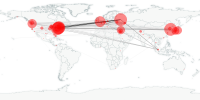
Conflict Map of the Counterjihad
Media Cheerleaders for Despair
Labels: 4GW, al qaida, insurgency, islamist, strategy, terrorism, theory, war, wolf pangloss
¶ 8:12 PM 7 comments

" To summarize, we seek to radically change the cultures and political systems for much of the world, to halt foreign revolts and civil wars of which we do not approve, to bring global peace and prosperity, to make friends (even with those states whose rise we seek to restrain), and to “transform” our so far unreformable national security apparatus. Those who thought President Bush was kidding about these learned better in the months following our invasion of Iraq."
- Fabius Maximus
For some time now, an author whose nom de guerre is "Fabius Maximus", after the ancient Roman general of the Punic wars, has been a regular and at times, prolific, contributor to the Boydian and 4GW school oriented Defense & the National Interest. Fabius, who comments here at Zenpundit on occasion, also set off one of the most popular, if heated and controversial, threads at The Small Wars Council, catching the attention of noted COIN strategist Col. David Kilcullen. Kilcullen's theories later became a subject of frequent critique from Fabius in his DNI articles.
While I had hoped to meet Fabius in person at Boyd 2007, he did not attend and I am not privy to his identity or professional background. Fabius' arguments must rise or fall entirely on their own merit and he has been content to engage his critics on this basis at the SWC and elsewhere. Clearly he is a member of the 4GW school and is an admirer of Col. John Boyd, William Lind, Dr. Martin van Creveld and Dr. Chet Richards but has not shrunk from advancing his own ideas or original criticisms.
Recently, Fabius completed his tenth article in a series on America's Long War for DNI and, as Fabius has entertained and enraged members of the community of "reform" defense intellectuals and COIN practitioners, it is timely for us to take stock of his strategic argument:
The Long War Series - from DNI's Fabius Maximus Archive
Part X - One step beyond Lind: what is America’s geopolitical strategy?
Part IX - 4GW at work in a community near you,
Part VIII - How to accurately forecast trends of the Iraq War,
Part VII - Kilcullen explains all you need to know about the Iraq War,
Part VI - The bad news is that Lind’s good news is wrong,
Part V - The Iraq War as a warning for America,
Part IV - Beyond Insurgency: An End to Our War in Iraq,
Part III - Stories or statistics? Read and compare to find the truth!
Part II - News from the Front: America’s military has mastered 4GW!
Part I – America takes another step towards the “Long War,”
I have read the roughly 20,000 words offered here previously and I re-read them for this post. I have also read most of the authors of the original works that Fabius Maximus cites in his series. Therefore, I feel qualified to offer a few observations in regard to the strategic paradigm that this body of work represents and the assumptions, clearly stated as well as implicit, upon which it is built.
Many of the specific analytical criticisms of American policy and performance in Iraq and Afghanistan made by Fabius are incisive, some are rather questionable and a few are brilliant. I encourage you to read his efforts for yourself rather than simply accepting my word for it. What interests me most though, given the scope of the series, are his premises. As I discern them, they are:
That 4GW is the environment in which we find ourselves conducting operations - and doing so quite poorly at that with a military predisposed toward 2GW offensives. Or irrelevantly on the strategic level where we happen to be executing COIN well on the tactical level.
We cannot significantly affect the internal dynamics of alien societies that we understand poorly or not at all, regardless of the carrots or sticks used. We are marginal factors at best.
American war policy is being constructed on the false analogy of the Cold War model.
Al Qaida is more phantom than menace.
War is the wrong conceptual metaphor and the wrong operational-bureaucratic response to the conflict in which we find ourselves.
Our response, which serves bureaucratic and factional interests at homes, undermines our global strategic position and wastes our economic strength.
A better grand strategy for America is nonintervention and reducing friction with the rest of the world. Or failing that, at least bolstering states, any states, rather than collapsing them into failure with military attack or other pressures ( Lind's "Centers of Order vs. Centers of Disorder")
If George Kennan argued for "Containment" of Soviet Communism in his "X" article the best descriptor of the grand strategy of Fabius Maximus might be " Conservancy" - dialing down our kinetic response to terrorism to the surgical level and recognizing this contest as more ideological conflict than war and, in general, recognizing our limitations in attempting to become masters of the universe. Many readers would associate this paradigm with the Left but I believe that to be incorrect. Instead, reflecting a deeply paleoconservative reading of history and American traditions in foreign policy that historian Walter A. McDougal called "Promised Land" and others "city on a hill" and " isolationism".
The virtues of "conservancy" as I interpret Fabius is that it minimizes both costs and future commitments for the United States, leaving us better able to afford to deal with strategic threats to vital national interests, when unanticipated threats arise, as they surely will. It would serve as a reality check on statesmen to pursue fewer, more coherent, simpler, more easily realizable and markedly cheaper objectives, which will have far higher probability of success ( as opposed to say, attacking Iran while engaged in Iraq. Or perhaps invading Russia in winter or fighting a land war in Asia. Some folks around PACOM with a few years ago with uber-journalist Robert Kaplan's ear, thought an unprovoked war with China was a splendid idea). When forced to intervene, our footprint will be light; more like British frontier agents of old or the 55 advisers in El Salvador in the 1980's than the invasion of Iraq. As a nation, our foreign policy would stay on the good side of the diminishing returns curve.
The drawbacks include, in my view: being flatly incorrect about al Qaida's potential to initiate attacks on the operational or strategic level specifically, and about the threat of radical Islamist-Mahdist movements in general, when coupled with increasing capacities to leverage against complex systems ( see John Robb's Brave New War); underestimating the geopolitical ripple effect of the U.S. shifting to a conservancy posture, upending the global security arrangements upon which the calculations of statesmen currently depend. The unanticipated consequences of the latter are large. Within two to three levels of unfolding decision-tree possibilities, any potential response by the U.S. is simply swamped. We benefit by the status quo. Changing our position imposes costs.
I invite Fabius Maximus to respond as he likes and I will publish his remarks here, unedited. Readers are invited to offer their own critique in the comments section.
Labels: 4GW, 5GW, al qaida, COIN, dni, fabius maximus, iraq, islam.insurgency, islamist, john boyd, state failure, strategy, terrorism, war, william lind
¶ 5:58 PM 12 comments
The most comprehensive, English-language, ideological analysis of Islamist extremist and terror movements yet compiled; assembled by the Combating Terrorism Center at West Point.
Executive Summary (23 page PDF)
Research Compendium (361 page PDF)
Hat tip to Charles Cameron for the title of this ( actually, many) interesting scholarly work and to Right Truth for the URLs.
UPDATE:
Heh. Plagued by basic reading comprehension problems last night. Title corrected. Gracias, Charles!
Labels: al qaida, analytic, COIN, islam.insurgency, islamist, military, military intelligence, national security, strategy, terrorism, tribes, war, warriors
¶ 6:48 PM 0 comments

"al Qaidastan" Rising
Fourth Generation Warfare, according to it's leading theorists, is designed to challenge the legitimacy of the state. It's "kinetic" attacks are really a form of ju-jitsu designed to strike the enemy society at the mental and moral levels and thereby cripple the state apparatus through which modern nation-states govern themselves.
Repeated successful mitary forays by 4GW entities, perhaps in alliance with local ethnic and criminal organizations, can create a "TAZ" or temporary autonomous zone, outside the rule of law. "Temporary" is a useful descriptor because, frequently, police, paramilitary or Army units are able to "re-take" the TAZ from 4GW control because these decentralized forces melt away, go underground or shift to a less direct form of conflict such as system disruption or the use of IED type munitions.
However, there are now enough examples of recent vintage to tentatively answer the question of what happens when a TAZ under the domination of a 4GW group slides toward permanency? Al Qaida, is now doing so for the second time in it's history, as detailed by Pramit Pal Chaudhuri:
"Confederation of Terror
On September 6 the Islamic Emirate of Waziristan marked the first anniversary of its de facto recognition. On that day last year, the Taliban used the name when it signed a ceasefire agreement with the Pakistani government. The ceasefire is in tatters, but the terror trail of the recent plots in Germany and Denmark indicates that the Emirate is doing fine.
The Emirate's writ is spreading among the mountainous areas that make up the Federally Administered Tribal Areas (FATA) that run along the Pakistan-Afghan border. Going by trends, the Emirate is more than just a safe haven: It is on a nightmare path of nation-building. Osama bin Laden will be its sultan; Mullah Omar its spiritual leader; heroin and smuggling its economic drivers; and terrorism its primary export. "Al Qaeda is building a mini-state, an enclave, in the FATA," says Rohan Gunaratna, author of Inside al Qaeda.
Besides the heartland of South and North Waziristan, "al Qaedastan" also encompasses a belt of tribal land going up to Mohmand and Bajaur areas. Its sphere of violent influence, says a former member of the Afghan National Security Council, includes bordering Afghan provinces like Loya Paktia and, increasingly, Nangarhar...
...The malik, a local chief who helped keep the peace since the British Raj, and represented an older secular Pashtun nationalism, has been marginalized. The mullah now holds sway. "The Durrani tribal maliki that once dominated these areas is being physically eradicated," says Michael Shaikh of the International Crisis Group.
Some argue this is nothing more than Durrani nobility being replaced by an upstart subtribe, the Ghilzai. But the spread of Islamicism is blurring tribal distinctions. "Today's Taliban are fighting for an extremist ideology, not for Ghilzai supremacy," says an Afghan official. An example of how this ideology is taking root is how it has ended the centuries-old feuds between the Waziri and Mehsud subtribes.
The "al Qaedaization" of the Taliban can be seen in their use of suicide bombing, human shields and bloodier kidnappings, practices abhorrent in traditional Pashtun culture. The Afghan government has no doubt this represents foreign tutelage. Says the Afghan ambassador to the U.S., Said Tayeb Jawad: "Al Qaeda is the commander, the Taliban the foot soldier. Al Qaeda provides strategic guidance"
William Lind, during the Israeli-Hezbollah War, suggested that after having attained a critical mass of legitimacy through sustained political-military success, 4GW organizations faced a choice of "To Be or Not To Be, a State". Lind argued that statehood was equivalent with vulnerable "targetability" and that Westphalian-era mummery was something that 4GW forces could best do without.
To an extent, Lind was correct. Neither Hezbollah, nor the Islamic Courts Union, HAMAS, al Qaida or even the Taliban during the period of their rule of Afghanistan, have ever formed a proper and recognized state apparatus. Nor have they, when enjoying longer-term territorial control, remained covert guerilla-terrorist networks either. Instead, they have tried to lock in their comparative advantages with an Anti-State model existing alongside or symbiotically integrated with, the sovereign state.
The 4GW Anti-State has certain recognizable characteristics or tendencies:
*Corporative: The 4GW organization openly lives by it's own codes, not the state's, with final authority for enforcement. The 4GW entity may impose these codes on the people over whom they exist (Taliban), or apply them primarily to their own membership (HAMAS) but the state has de facto ceded that prerogative.
*Post-Westphalian: The borders and claims of the nation-state are irrelevant, whether we are discussing a Pushtunistan-based "al Qaidastan" that crosses the Durand Line or a Transnational Criminal Organization network like a Russian mafiya clan with cells under discipline from Novgorod to Brighton Beach to Budapest to Tel Aviv. The 4GW Anti-State can be geographic or virtual as the primary loyalty attachment for the membership is a psychological and social one.
*Hegemonic Governance: The 4GW entity frequently, as HAMAS and Hezbollah have amply demonstrated, provide a sophisticated array of public goods and other services, often free of charge, in order to cultivate political legitimacy among the larger population. They do not accept all of the de jure responsibilities for the local population that are normally traditional for a rcognized sovereign and suppress rival authorities or independent-minded individuals with arbitrary force. In matters outside of the interests of the 4GW entity, residents are left to their own devices ( or the mercy of smaller predators) so that resources are conserved.
*Symbiotic Coexistence: The 4GW group is shielded, to a degree, from international intervention by coexisting within the confines of a recognized and sovereign nation-state that is unwilling (Sudan, Iran) or unable (Afghanistan, Pakistan, Lebanon, Iraq) to bring them to heel and even more unwilling to let outsiders do so. Like a parasite, a 4GW entity, if unchecked, is capable of hijacking it's host nation-state to serve it's own needs as al Qaida did in Afghanistan before 9/11.
The Anti-State model is useful for 4GW forces at a certain threshold of magnitude because it offers some of the defensive advantages of statehood with far fewer of the responsibilities or liabilities with running a state.
UPDATE:
John Robb was kind enough to link and had this comment:
"Mark, over at ZenPundit, has an excellent (!) post on the virtual-state (not sure that 4GW, as a description of a form of warfare, works as a label for this). "
Thanks, John! I'm not sure it works either - LOL! An explanation though:
I used "4GW" primarily because I was interested in how such movements are developing semi-permanent, alternative, forms of governance to the nation-state. Bobbitt's "Virtual-State" could work well in many instances for what 4GW forces are in a structural or behavioral sense but the term also has broader application.
Then there is also the issue where 4GW entity is overlapping pre-modern (at times, ancient), subnational, territorial/tribal identities that are the very antithesis of "the state". A schizoid hybrid, if you will. The analogy can be misleading because these phenomena have aspects that are very unlike the state of Max Weber, despite usurping some of the functions, so I used " Anti-State". I'm not wedded to the term yet as the whole issue needs more fleshing out and discussion (and as Fabius noted in the comments, empirical investigation).
Labels: 4GW, al qaida, hezbollah, state failure, virtual states, william lind
¶ 6:34 PM 11 comments

In memory of those who died 11 September, 2001.
Special thanks to the soldiers, sailors, airmen and officers of our intelligence community currently serving in harm's way in the long war and, most of all, to those who will never return. America is in your debt.
Labels: 9/11, al qaida, terrorism
¶ 7:17 PM 0 comments

What to make of Osama Bin Laden sounding less like a radical Salafist in his recent video than the infantile Sean Penn on a hysterical political rant, throwing in an homage to Noam Chomsky and global warming ? Well, government sources are pointing "Azzam the American", the young Californian convert, Adam Yahiye Gadahn as the origin of the more childish rhetoric that seems to be ripped from the memes of the Lefty Wingnut blogosphere.
In my opinion, that is a stupid interpretation. If it comes from our intelligence agencies, and not some staffer at the White House, all the worse for us.
First of all, such an analysis gives far too much emphasis to the role of Gadahn, a relatively juvenile character. Al Qaida does not lack members with the ability to read English or surf the internet. The radical Islamist-terrorist community have long monitored American websites, particularly those related to military and intelligence circles; one of their favorite theorists appears to be none other than William Lind! Gadahn's help in video production is a triviality, not a primary concern.
Secondly, the hodgepodge nature of the speech with Bin Laden zooming from Sarkozy to tax rates is indicative of an intentional raising of the noise to signal ratio. Much of this verbiage appears to me to be - well - irrelevant crap. It attracts media attention while distracting observers from two of the more ominous elements present in bin Laden's speech - his continuing fascination with the atomic bombings of Hiroshima and Nagasaki and the call to embrace Islam. The latter being a religious duty for pious Muslims prior to the unleashing of war and ruin upon an enemy; a call once uttered by the generals of Arab caliphs and Turkish sultans half a millennium ago, before the sacking of infidel cities by Muslim armies.
The Germans just rolled up a major al Qaida cell days before an attack was to take place. Perhaps we should be looking at potential problems just a little bit harder ourselves.
Labels: 9/11, al qaida, analytic, bin laden, IO, terrorism
¶ 4:15 PM 6 comments
Great piece by Colonel Kilcullen at SWJ Blog on the "flipping" of Anbar province by the tribal revolt against AQI:
"The implications of the tribal revolt have been somewhat overlooked by the news media and in the public debate in Coalition capitals. In fact, the uprising represents very significant political progress toward reconciliation at the grass-roots level, and major security progress in marginalizing extremists and reducing civilian deaths. It also does much to redress the lack of coalition forces that has hampered previous counterinsurgency approaches, by throwing tens of thousands of local allies into the balance, on our side. For these reasons, the tribal revolt is arguably the most significant change in the Iraqi operating environment for several years. But because it occurred in ways that were neither expected nor accounted for in our “benchmarks” (which were formulated before the uprising began to really develop, and which tend to focus on national legislative developments at the central government and political party level rather than grass-roots changes in the quality of life of ordinary Iraqis) the significance of this development has been overlooked to some extent."
We should run with the grassroots and try to get tolerably effective Iraqi self-government at the local and provincial level and simply cut our losses with the central government. Let it fade into irrelevance as most Iraqis already ignore its edicts anyway.
The opportunity of the democratic elections were blown when the Iraqi power brokers (few of whom could be considered democrats in any meaningful sense and see a truly democratic system as inimical in principle to their own in-group leadership) were permitted to drag out negotiations over forming a government until legitimacy and popular interest generated by the elections eroded. We should have instead, followed the example of the noteworthy "Small Wars" fighter, General Leonard Wood.
The general, who was running occupied Cuba as the military governor in the immediate aftermath of the Spanish-American War, faced a similar situation with the intransigence of wealthy, landed, Cuban elites who filled the legislature who were attempting to outwait Wood by creating a political deadlock until the Americans went home. General Wood, who understood the game being played and the free-for-all that would ensue if American troops left Cuba without a functional government, simply locked the doors of the parliament and his armed soldiers refused to permit anyone to leave until the legislators finished their business and also ratified the unpopular Platt amendment.
The latter effectively made Cuba a protectorate of the United States in name as well as fact but from a realist perspective, it also quashed the possibility of civil war, boosted Cuba's economy and guaranteed a functioning civil government in Havanna for two and a half decades, even if it required a new military intervention. Iraq is not nearly so well off.
ADDENDUM
SWJ BLOG
Glittering Eye
Sic Semper Tyrannis
Global Guerillas
Iraq the Model
Labels: al qaida, COIN, insurgency, iraq, islamist, kilcullen, military, primary loyalties, small wars journal, tribes, war, warriors
¶ 7:32 PM 2 comments
Here's the news story.
The SWJ Blog links to the IG Report executive summary. (PDF)
Here are a few reactions ( originally, I planned a wide spectrum of blogospheric opinion but found too much of it to be simpleminded, partisan, blather, so I stuck with the available informed commentary):
Haft of the Spear:
"They are basically saying that not only were parts of the system broken, anyone with half a wit should have been able to see that and take action (or at least raise an alarm). That no one bothered says that either leadership was not all it was cracked up to be, or that the way the system treats squeaky wheels is such that no one - witless or not - thought raising a stink was worth the risk. Stupidity and fear, fortunately, are not excuses."
Sic Semper Tyrannis:
" The CIA like the DIA failed miserably to penetrate the apparatus of the takfiri jihadi networks. Such penetrations would have enabled the US to anticipate coming jihadi actions.
Once again it will be said that penetrating these groups is "too hard to do." Rubbish. I know better. Why were these groups not penetrated?
Timidity. Fear of Risks, Bureaucratic inertia. Poor leadership at the top in all the significant organizations. Has anything changed? I doubt it. If it had, bin Laden would be dead by now."
When a system is fundamentally broken you do not need to simply look for loose bolts or missing parts or even a new mechanic ( though firing an old one might be a useful message to send to their replacement) - what you do is find some engineers and a drawing board.
Labels: al qaida, CIA, defense, foreign policy, IC, intelligence, national security, terrorism
¶ 8:19 PM 2 comments
"It shall be the policy of this Nation to regard any nuclear missile launched from Cuba against any nation in the Western Hemisphere as an attack by the Soviet Union on the United States, requiring a full retaliatory response upon the Soviet Union."
- John F. Kennedy, President of the United States
"Acquiring weapons for the defense of Muslims is a religious duty. If I have indeed acquired these weapons, then I thank God for enabling me to do so. And if I seek to acquire these weapons, I am carrying out a duty. It would be a sin for Muslims not to try to possess the weapons that would prevent the infidels from inflicting harm on Muslims."
-Osama bin Laden, "amir" of al Qaida
Both the Soviet Union and the United States amassed immense nuclear arsenals during the Cold War of approximately 50,000 warheads of various sizes and a range of systems with which to deliver these terrifying weapons. A number of other second and third tier states later joined "the nuclear club", seeking a hedge against regional enemies or desiring the totemic status in international relations brought by possession of nuclear arms.
None of these states, not even Israel which is reputed to have up to 200 nuclear bombs, ever developed a nuclear weapons capability that remotely matched that of the superpowers. A number of nuclear-capable states have either eschewed building nuclear weapons (Germany, Japan, Taiwan) or have been persuaded to disarm those that they had inherited or assembled ( Belarus, Ukraine, Kazakhstan and South Africa).
So lopsided are the throw-weight ratios between countries with small yield or primitive atomic weapons and the stockpiles retained by the U.S. and Russia that most of the nuclear club have arsenals that are useful only for deterring a military attack from their immediate non-nuclear neighbors or a nuclear peer. Pakistan's nuclear status was of no help in warding off American demands after 9/11; had Islamabad attempted to brandish, much less use, nuclear weapons in defense of their Taliban clients, it would have surely invited Pakistan's immediate destruction.
Cheryl Rofer of Whirledview, had a post "The Necessity of the U.S. Nuclear Deterrent: A White Paper" that analyzed a recent quasi-official document “White Paper on the Necessity of the U. S. Nuclear Deterrent” authored by a cluster of national security VIPs, including several past CIA directors and current advisers to the US Strategic Command. The paper summarizes many obvious points about American nuclear deterrence and calls for a " debate". Cheryl found the paper to be lacking:
"No real threat assessment is offered, just vaguely threatening words about Russia, China, North Korea and Iran. For a group of folks trying to move out of the Cold War mindset, that’s an interesting ordering of countries.
....Is the white paper saying that US nuclear policy is only about deterrence? Nothing about the Nuclear Nonproliferation Treaty and its obligations? Nothing about the uselessness of deterrence against mobile subnational groups with no territory to defend? The only thing that is important to our allies is US security assurances, backed up by the threat of nuclear warfare?
....This white paper is stuck in the the Cold War, circa 1969. "
I think the white paper authors are correct that the perceived credibility of American nuclear guarantees dampen down potential nuclear arms races among third parties, notably in Northern Asia. Cheryl however, is correct on the larger point that the analytical assumptions of the paper are shot through with Cold War legacy mentalities.
Arguably, the white paper does not even match the Cold War era in terms of nuanced thinking. In 1958, in Nuclear Weapons and Foreign Policy, Henry Kissinger wrote:
"It is the task of strategic doctrine to strike a balance between the physical and the psychological aspects of deterrence, between the desire to pose a maximum threat and the reality that no threat is stronger than the belief of the opponent that it will in fact be used. A strategy which poses alternatives that policy-makers are unwilling to confront will induce either inaction or improvisation. A strategy which establishes a superior balance between power and will may then gain a crucial advantage, because it permits initiative and shifts to the other side the risks inherent in making countermoves" (Kissinger, 175)
CKR aptly pointed out the obvious alternative of non-state and subnational actors with nuclear weapons that the white paper's authors were " unwilling to confront" in their state-centric focus.
Here are a few others that would relate to the state of American deterrence, enhancing or undermining it:
* Potential, novel, weaponization of of aspects of nuclear particle research outside classic uranium 235 and plutonium bombs.
* The need for more effective controls and tracking of trade in esoteric, dual-use, technologies of weaponization that make nuclear devices useful militarily. Increasing transparency level of same.
*Identifying non-nuclear technologies that could result in weapons of a comparable order of magnitude of destruction or loss of life as with low-level nuclear weapons.
* Strengthening and expanding the inspections regime under which NPT signatories are permitted access to nuclear technology for peaceful purposes. Addition of automatic penalties if NPT signatories are caught cheating, subject to removal or waiver by the UNSC ( putting the burden on the accused proliferator to come clean instead of on the IAEA or UNSC states to get any meaningful sanctions applied).
* De-escalating the potential for future conflict between nuclear and nuclear capable states by instituting new regional diplomatic and security structures.
* International nuclear convention regarding the security of nuclear materials and command and control by the nuclear weapons states.
* Moral-political-legal campaigns that degrade the credibility of American deterrence by ratcheting upward the "unthinkability" of nuclear weapons use, thus tempting potential adversaries to risk the very brinksmanship scenarios ( war, apocalyptic terrorism) that would make the use of nuclear weapons possible or likely.
* Avoiding "nuclear weapons deflation" as an unintended consequence of arms control. Striking a balance between reducing large American and Russian arsenals and unduly increasing the military value of small ones and the temptation to increase them in order to reach "parity" with America and Russia ( "linkage" for all nuclear club arsenals). Or worse, the temptation to sell or use them.
* Removal of strategic nuclear materials from the global black market by vastly accelerating certified destruction or reprocessing of obsolete national stocks.
* Developing new models of deterrence that would be concurrently perceived as credible by states, non-state actors and subnational/ transnational networks who may all be within an interdependent nexus of responsibility for a catastrophic WMD attack.
* Identifying and categorizing non-state network threats to American security with potential WMD capacity.
* Understanding the parameters of the possible in terms of private networks and WMD capabilities, through intellectually honest red team exercises.
* Examining the balance of utility between emphasizing clarity and uncertainty in American nuclear response and deterrence policy in a multi-polar and non-state actor era.
Many of my variables are not new but they are of at least more recent vintage and of a broader horizon than what the white paper has considered. I'm interested in hearing your thoughts as well.
Labels: 21st century, al qaida, America, arms control, CKR, deterrence, diplomacy, military, networks, nuclear, terrorism, war, whirledview, youtube
¶ 12:38 PM 7 comments
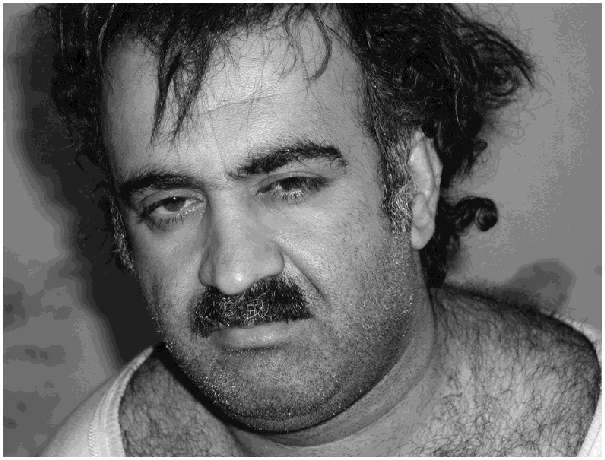
I have to hand it to the Bush administration; their determined incompetence in handling war criminals on legal, political, diplomatic and military grounds knows few bounds. Who else could manage to take the onus off of a monster like Khalid Sheikh Mohammed, who masterminded the deaths of thousands of innocent people, and make American judicial procedure the issue instead?
Anthony D'Amato, a professor at Northwestern University Law School and a well regarded expert in International Law, has just excoriated the Bush administration in JURIST. Just for the record, Dr. D'Amato is no softheaded transnationalist or dovish liberal. Quite the contrary, when Israel bombed Saddam's nuclear reactor at Osirak back in 1982, it was Professor D'Amato, virtually alone among IL experts, who went before Congress and testified in favor of the legality of Israel's attack.
"True Confessions? The Amazing Tale of Khalid Shaikh Mohammed"
"Students of the Stalinist purges of the 1930s will recall the astounding confessions made in open court by the accused persons. They had been severely tortured over weeks and months. But they showed up in court without external marks of torture. With all apparent voluntariness, they admitted subverting the Five-Year Plans that would have provided the Soviet people with necessary food items. They sabotaged factories, making sure the production lines were inefficient. They managed to import inferior metals so that Soviet tanks and automobiles would fall apart after a few months’ use. They infiltrated the Soviet Army and through dint of their persuasiveness, convinced the foot soldier that it was absurd to risk his life defending a dictatorial government. In short these accused persons, briefly in court on their way to the firing squad, took responsibility for everything that had gone wrong for the past two decades in the Union of Soviet Socialist Republics.
So why is it today that no one draws the connection between the Soviet purge trials and the confession of Khalid Shaikh Mohammed? Mohammed said that he had been tortured by his American captors. No one contradicted his assertion. Then he went on, with a straight and sincere face, to take responsibility for a long list of crimes recently perpetrated"
KSM should have been tried within shouting distance of 9/11 for violating the laws of war and upon conviction, hanged. Simple enough. The standards of justice there are crystal clear.
Truman did not shrink from executing Tojo or Goring. Eisenhower refused to spare the Rosenbergs despite the noxious clamor of an organized campaign by fellow travellers. Democracies once had the moral self-confidence to try and condemn their deadliest enemies for their crimes and were proud to do so swiftly and openly.
No longer.
Labels: al qaida, bush, d'amato, guantanamo, illegal combatants, khalid sheikh mohammed
¶ 7:01 PM 5 comments