Colonel Frans Osinga, PhD, who gave a tour de force lecture at Boyd 2007, managed to prevail upon his publisher to sell a paperback version of Science, Strategy and War:The Strategic Theory of John Boyd at a price non-billionaires could afford.
I will be reviewing Science, Strategy and War in December and - tentatively - organizing a roundtable discussion at Chicago Boyz, most likely after Christmas. If you are a blogger, academic or a current or former member of the armed services and are interested in participating, send me an email at zenpundit@hotmail.com.
Labels: 4GW, boyd 2007, ideas, intellectuals, john boyd, military, military history, military reform, science, strategy, theory, war, warriors
¶ 7:05 PM 2 comments
Wolf Pangloss has a series of interesting posts on 4GW and information operations that readers might care to consider in light of the discussion that has ensued in the comments section of the post on the strategic analysis of Fabius Maximus. Wolf's posts are:
Democracies at 4GWar
4GW Jihad and the role of the World Media
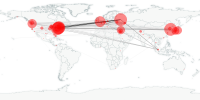
Conflict Map of the Counterjihad
Media Cheerleaders for Despair
Labels: 4GW, al qaida, insurgency, islamist, strategy, terrorism, theory, war, wolf pangloss
¶ 8:12 PM 7 comments

" To summarize, we seek to radically change the cultures and political systems for much of the world, to halt foreign revolts and civil wars of which we do not approve, to bring global peace and prosperity, to make friends (even with those states whose rise we seek to restrain), and to “transform” our so far unreformable national security apparatus. Those who thought President Bush was kidding about these learned better in the months following our invasion of Iraq."
- Fabius Maximus
For some time now, an author whose nom de guerre is "Fabius Maximus", after the ancient Roman general of the Punic wars, has been a regular and at times, prolific, contributor to the Boydian and 4GW school oriented Defense & the National Interest. Fabius, who comments here at Zenpundit on occasion, also set off one of the most popular, if heated and controversial, threads at The Small Wars Council, catching the attention of noted COIN strategist Col. David Kilcullen. Kilcullen's theories later became a subject of frequent critique from Fabius in his DNI articles.
While I had hoped to meet Fabius in person at Boyd 2007, he did not attend and I am not privy to his identity or professional background. Fabius' arguments must rise or fall entirely on their own merit and he has been content to engage his critics on this basis at the SWC and elsewhere. Clearly he is a member of the 4GW school and is an admirer of Col. John Boyd, William Lind, Dr. Martin van Creveld and Dr. Chet Richards but has not shrunk from advancing his own ideas or original criticisms.
Recently, Fabius completed his tenth article in a series on America's Long War for DNI and, as Fabius has entertained and enraged members of the community of "reform" defense intellectuals and COIN practitioners, it is timely for us to take stock of his strategic argument:
The Long War Series - from DNI's Fabius Maximus Archive
Part X - One step beyond Lind: what is America’s geopolitical strategy?
Part IX - 4GW at work in a community near you,
Part VIII - How to accurately forecast trends of the Iraq War,
Part VII - Kilcullen explains all you need to know about the Iraq War,
Part VI - The bad news is that Lind’s good news is wrong,
Part V - The Iraq War as a warning for America,
Part IV - Beyond Insurgency: An End to Our War in Iraq,
Part III - Stories or statistics? Read and compare to find the truth!
Part II - News from the Front: America’s military has mastered 4GW!
Part I – America takes another step towards the “Long War,”
I have read the roughly 20,000 words offered here previously and I re-read them for this post. I have also read most of the authors of the original works that Fabius Maximus cites in his series. Therefore, I feel qualified to offer a few observations in regard to the strategic paradigm that this body of work represents and the assumptions, clearly stated as well as implicit, upon which it is built.
Many of the specific analytical criticisms of American policy and performance in Iraq and Afghanistan made by Fabius are incisive, some are rather questionable and a few are brilliant. I encourage you to read his efforts for yourself rather than simply accepting my word for it. What interests me most though, given the scope of the series, are his premises. As I discern them, they are:
That 4GW is the environment in which we find ourselves conducting operations - and doing so quite poorly at that with a military predisposed toward 2GW offensives. Or irrelevantly on the strategic level where we happen to be executing COIN well on the tactical level.
We cannot significantly affect the internal dynamics of alien societies that we understand poorly or not at all, regardless of the carrots or sticks used. We are marginal factors at best.
American war policy is being constructed on the false analogy of the Cold War model.
Al Qaida is more phantom than menace.
War is the wrong conceptual metaphor and the wrong operational-bureaucratic response to the conflict in which we find ourselves.
Our response, which serves bureaucratic and factional interests at homes, undermines our global strategic position and wastes our economic strength.
A better grand strategy for America is nonintervention and reducing friction with the rest of the world. Or failing that, at least bolstering states, any states, rather than collapsing them into failure with military attack or other pressures ( Lind's "Centers of Order vs. Centers of Disorder")
If George Kennan argued for "Containment" of Soviet Communism in his "X" article the best descriptor of the grand strategy of Fabius Maximus might be " Conservancy" - dialing down our kinetic response to terrorism to the surgical level and recognizing this contest as more ideological conflict than war and, in general, recognizing our limitations in attempting to become masters of the universe. Many readers would associate this paradigm with the Left but I believe that to be incorrect. Instead, reflecting a deeply paleoconservative reading of history and American traditions in foreign policy that historian Walter A. McDougal called "Promised Land" and others "city on a hill" and " isolationism".
The virtues of "conservancy" as I interpret Fabius is that it minimizes both costs and future commitments for the United States, leaving us better able to afford to deal with strategic threats to vital national interests, when unanticipated threats arise, as they surely will. It would serve as a reality check on statesmen to pursue fewer, more coherent, simpler, more easily realizable and markedly cheaper objectives, which will have far higher probability of success ( as opposed to say, attacking Iran while engaged in Iraq. Or perhaps invading Russia in winter or fighting a land war in Asia. Some folks around PACOM with a few years ago with uber-journalist Robert Kaplan's ear, thought an unprovoked war with China was a splendid idea). When forced to intervene, our footprint will be light; more like British frontier agents of old or the 55 advisers in El Salvador in the 1980's than the invasion of Iraq. As a nation, our foreign policy would stay on the good side of the diminishing returns curve.
The drawbacks include, in my view: being flatly incorrect about al Qaida's potential to initiate attacks on the operational or strategic level specifically, and about the threat of radical Islamist-Mahdist movements in general, when coupled with increasing capacities to leverage against complex systems ( see John Robb's Brave New War); underestimating the geopolitical ripple effect of the U.S. shifting to a conservancy posture, upending the global security arrangements upon which the calculations of statesmen currently depend. The unanticipated consequences of the latter are large. Within two to three levels of unfolding decision-tree possibilities, any potential response by the U.S. is simply swamped. We benefit by the status quo. Changing our position imposes costs.
I invite Fabius Maximus to respond as he likes and I will publish his remarks here, unedited. Readers are invited to offer their own critique in the comments section.
Labels: 4GW, 5GW, al qaida, COIN, dni, fabius maximus, iraq, islam.insurgency, islamist, john boyd, state failure, strategy, terrorism, war, william lind
¶ 5:58 PM 12 comments
The most comprehensive, English-language, ideological analysis of Islamist extremist and terror movements yet compiled; assembled by the Combating Terrorism Center at West Point.
Executive Summary (23 page PDF)
Research Compendium (361 page PDF)
Hat tip to Charles Cameron for the title of this ( actually, many) interesting scholarly work and to Right Truth for the URLs.
UPDATE:
Heh. Plagued by basic reading comprehension problems last night. Title corrected. Gracias, Charles!
Labels: al qaida, analytic, COIN, islam.insurgency, islamist, military, military intelligence, national security, strategy, terrorism, tribes, war, warriors
¶ 6:48 PM 0 comments
Beltway based Pundita observes:
"The US is fighting a war in a region where we've been very hostile to two countries bordering the war zone. Pundita is of the mind that the top priority is to win the war, and for that we need all the help we can get.
Right now Syria's government is overwhelmed with looking after refugees from Iraq. So I would try offering Syria considerable help in exchange for vigilance with foreign travelers.
When it comes to asking Iran and Syria for help with Iraq, I see too much halfhearted trying from the US, then waving of hands and saying, 'See, they won't deal.' Try harder."
I agree. Iran and Syria are nasty regimes whose actions we must often oppose but where they are willing to cut some fair deals we should get down to business. Freezing Castro in the diplomatic equivalent of absolute zero has only served to help preserve his Communist- caudillo regime until the dictator's old age while irritating most of our allies and trading partners. Do we really want a 92 year old Bashar Assad still in power someday ?
Labels: diplomacy, foreign policy, iran, iraq, mideast, pundita, strategy, syria
¶ 9:55 AM 3 comments
A set of papers from The Washington Institute for Near East Policy entitled "Deterring the Ayatollahs: Complications in Applying Cold War Strategy to Iran".
Hat tip to Jedburgh of The Small Wars Council.
Labels: deterrence, diplomacy, foreign policy, iran, mideast, national security, nuclear, small wars council, strategy
¶ 8:00 PM 0 comments
Dr. Barnett, opining yesterday on the recent NYT op-ed on Kennan:
"The dearth of strategic thinking reaches a new low, or maybe this is just a Kennan scholar pre-hawking his new book.
Now we get the out-of-time argument that containment is the answer on radical Islam.
It's not much of an argument, but rather a decent rehashing of Kennan's thinking on the Sovs. The problem here, of course, is that al-Qaida doesn't translate well to an authoritarian empire already in existence.
Another problem, which I flayed at length in PNM, is that global historical forces are moving in a direction very different from that of the late 1940s and early 1950s. We're not in some bilat standoff of camps with little dynamic interchange between them. We're watching a consolidation period unfold following a massive expansion of globalization, one that's simultaneously accompanied by its further expansion thanks to the huge resource draw from rising Asia. "
We have a severe shortage of Kennans these days. While of course, there was only one Kennan writing the Long Telegram there were also the Stimsons, Marshalls, Achesons, Nitzes, Forrestals, Vandenbergs, Lovetts, Dulles', McCloys, Wohlstetters, Kahns and many others who came before and after Kennan who made their own contributions to the development of the Containment strategy. Our diplomatic and national security bench was deep in those days and often, these statesmen brought real experience in international finance, logistics and linguistics to the table ( Wohlstetter and Kahn were the cutting edge of the academic -strategist wave that replaced the Wall Street and Railroad company lawyer generation).
Today, we see most of our big picture and thinkers outside of government and often academia as well, writing books, giving speeches or building private sector companies. Tellingly, the most innovative policy of Bush's second term was developed not by a White House aide or a Cabinet secretary but by General David Petraeus - and his counterinsurgency strategy for Iraq was only accepted by the powers that be out of political and military desperation. The Democrats are no better, having had essentially no new policy ideas in almost two generations and a deep desire to ignore the existence of foreign policy altogether.
In part, this is a generational problem. Not only are the Boomers an amazingly self-centered lot, endlessly obsessing on ( and trying to re-live) the political traumas of their now distant youth, but the statesmen among them cut their teeth on the Cold War, bipolar, pre-Globalization, rigidly hierarchical world and are, for the most part, unwilling to revisit their anachronistic assumptions. There are exceptions but these people are usually outliers in some way, personally or professionally.
We may need to construct our defenses for the 21st century by retooling civil society to become more resilient, adaptive and dynamic - for the short term, our governing class may be a lost cause.
Labels: 20th century, 21st century, barnett, diplomacy, foreign policy, george kennan, history, national security, society, strategy
¶ 7:18 PM 11 comments
Matt at MountainRunner has a fine post on lessons that can be drawn from George Kennan's "Long Telegram".
"For those who frame the modern conflict in Cold War images, it might be useful to remember the real designs and purposes of early Cold War policies. For those who think public diplomacy is simply a beauty contest to hopefully "win hearts", should go back to the aggressive "five-dollar, five syllable" foundation of public diplomacy as a psychological struggle for minds and wills against an enemy who understood perception management."
Kennan's two volume memoirs make for some interesting reading, as does his work Russia and the West Under Lenin and Stalin, though it helps to have some of the period's diplomatic historiography under your belt to better read between the lines of Kennan's prose. If we have any George Kennan equivalents today, they are probably employed by the Defense Department or have been, which says a great deal about the intellectual and political decline of the State Department since Kennan's time.
KENNAN ADDENDUM:
"America and the Russian Future (1951)" by George F. Kennan
"More reflections on George Kennan" by Dave Schuler
"LET HISTORY JUDGE THE FATHER OF CONTAINMENT " - Zenpundit
"George Kennan Speaks to the War on Terror" and "Tipping Points" by CKR
Labels: America, cold war, Communism, diplomacy, diplomatic history, george kennan, mountainrunner, national security, strategy, war
¶ 2:05 PM 11 comments
Lexington Green asks this question at Chicago Boyz.
Labels: 4GW, America, chicago boyz, COIN, Ic dreaming 5gw, lexington green, strategy, theory, war
¶ 8:01 AM 2 comments
Art Hutchinson has had a very stimulating series of posts at Mapping Strategy that cover many topics related to strategic thinking and futurism that I cannot let pass without a high recommendation and brief commetary:
1. "Perils of Prediction: The Elusiveness of Certainty and the Value of 'Simulated Hindsight'"
Art lauds Nassim Nicholas Taleb's book, "The Black Swan: The Impact of the Highly Improbable" and discusses using "simulated hindsight" as a cognitive tool. This is not unlike counterfactual history exercises applied to futurism.
2. "sdrawkcaB gniknihT - Mind Game or Creative Lever?"
Art is concentrating here on reverse order thinking exercises which powerfully disrupt our brain's natural preference for automaticity in "learned" activities, forcing a rexamination of assumptions in terms of process, sequence and causation. Art also explains why some folks are more equal than others with this technique.
3. "Thinker or Tinker - In Pursuit of Practical Strategy"
Partly a blog dialogue between Art and Dave Snowden on narrative and scenario strategies and Art's advocacy of modular, interactive scenarios. Art also keys into the creativity/innovation aspect of recognizing and managing possibilities at what in the Medici Effect would be called " intersections".
Excellent.
Labels: art hutchinson, black swans, cognition, creativity, futurism, innovation, insight, strategy, uncertainty
¶ 3:34 PM 0 comments
Dr. Chet Richards of DNI has posted the introduction to his forthcoming book, If We Can Keep It. From what I have gathered, this book will be an extension of the radical military analysis Richards began with his previous work, Neither Shall the Sword: Conflict in the Years Ahead . An excerpt:
"Three national myths
The first is that “terrorism” poses the most serious threat to our survival and our way of life. In fact, the physical damage that terrorism does is small in comparison to other threats to our national well-being, and there are means available to reduce it even further. The greatest threat of “terrorism” is the damage we do to ourselves in sincere but misguided attempts to deal with it.
The second national misperception is that we still require a military establishment whose cost exceeds not just that of the next most powerful nation or even the next three, but of all the rest of the world, combined. Most of this expense goes into conventional (non-nuclear) forces that are no longer needed or even useful. The reason for this is not that world brotherhood has broken out, as earlier generations of pacifists mistakenly assumed, but that nuclear weapons have made wars between major powers impossible. States that are not nuclear powers, on the other hand, are either U.S. allies or are far too weak to pose any kind of military threat, and our attempts to use military force against non-state opponents, such as the “terrorists” mentioned in the previous paragraph, have not proven particularly successful.
The third, and perhaps the most dangerous because it seduces us into thinking that we can make military force into a normal tool of policy, is the notion of counterinsurgency theory. The problem is not that insurgencies cannot be defeated, but that proponents of this theory sometimes fail to distinguish between different meanings of the term “insurgency.” Several observers, recognizing this limitation, have proposed classifications. Biddle (2006) distinguishes between “people’s wars,” in which groups try to overthrow the government, and “communal civil wars,” where groups are fighting to avoid genocide. Metz (2007) classifies insurgencies based upon whether a legitimate government exists or can be created. These are both valuable and help explain why some insurgencies succeed where others do not.
....In the specific area of national defense policy, I recommend that the Department of Defense be gradually downsized to roughly the current U.S. Marine Corps plus special operations forces and supporting tactical air. This is more than adequate to deal with any future military threat. Concerning strategic – nuclear – forces, 10,000 weapons are more than we need to preserve the proven doctrine of mutually assured destruction (Blair, 2007a). Some reduction in this arsenal is clearly feasible.
Such a reordering of priorities towards our real problems implies a restructuring of the federal government. We should immediately disband the terrorism bureaucracy, particularly the Transportation Security Administration and its parent, the Department of Homeland Security and should review the roles and functions of the other agencies and departments.
Over time, as the Defense Department assumes its natural size, as has already happened with most of our European allies (Bacevich, 2006), intelligence will assume a more important function. Although military operations in the future will be rare, it becomes more important than ever that they be perceived by our friends and allies as justified, and when they do occur, they must be rapid, daring, and successful. Achieving this standard requires a step-function improvement in the integration of intelligence, diplomacy, and operations, so it will make sense to consolidate these functions in a single body where the controlling function is intelligence."
Read the entire introduction here.
It would appear that Richards, whose analytical framework is deeply rooted in the ideas of John Boyd, is throwing the 4GW hat into the ring of grand strategy, remediating a frequent criticism that 4GW thinkers are focused primarily upon tactical conflict and the destructive rather than constructive levels of strategic thinking. It will no doubt be an interesting and thought-provoking book that will stampede an entire herd of sacred cows beloved by defense intellectuals off of a cliff. That alone will make it a useful read.
My questions ( and Richards may very well answer them in his forthcoming book) raised by If We Can Keep It, would hinge on several variables:
* The utility of nuclear deterrence, upon which Richards' strategic transformation seems to depend, in an era when significant power (WMD capacity) appears to be devolving to progressively smaller ( and potentially less accountable, predictable and deterrable) substate and non-state networks. The history of nuclear deterrence and accompanying theory represents a large and complex literature with such thinkers as Brodie, Wohlstetter, Kahn, Kissinger and others who never satisfactorily arrived at answers to the conundrum presented by nuclear weapons.
Eisenhower-Dulles " massive retaliation" and "brinksmanship" put a brake on defense spending ( as Ike intended) but it was a very risky and blunt instrument. The idea that Washington would "trade New York for Paris" with the Soviets was never entirely a credible one. Nor did America's massive nuclear arsenal prevent Nasser from closing the Suez or Ho Chi Minh from subverting Saigon or even deter Khrushchev from his nuclear gamble in Cuba (in fact, our lopsided nuclear advantage probably was an incentive in Khrushchev's eyes to gain parity on the cheap).
* Steady-state assumptions about nation-state behavior in the international arena if conventional American power projection capacity was drastically reduced to levels proportionate to Western Europe. This is a major point to consider when offering a non-interventionist alternative to current strategy - American military power is the focal point of most regional security systems ( or opposition to them). To my mind, statesmen calculate their actions and plan their military expenditures based upon assumptions of American hegemony, welcome or not. The inability to even get to the starting block for military competition with the U.S. - we must think not just in terms of annual military budgets but in the colossal sunk costs of establishing a military-industrial base - is inhibiting regional arms races to a degree. Remove American preeminence from the equation and foreign statesmen are going to arrive at different calculations regarding their interests and security.
I look forward to reading it and entertaining Dr. Richards' argument in full.
Labels: 21st century, 4GW, America, chet richards, COIN, defense, deterrence, dni, foreign policy, insurgency, john boyd, military reform, national security, nuclear, small wars council, strategy, theory, war
¶ 7:01 PM 5 comments

* image and title shamelessly "liberated" from the multidisciplinarily creative Dan of tdaxp who previously posted an excellent series by the same name.
Two articles with diametrically opposed worldviews of American intervention overseas.The path to error lies in the simplification of both approaches:
"Africa Command: The Americans Have Landed" in Esquire by Dr. Thomas P.M. Barnett
(This article is currently only available in dead tree format)
"Rethinking Insurgency" (PDF) at Strategic Studies Institute by Dr. Steven Metz (hat tip to Danger Room)
Tom Barnett's Esquire article on the newly created AFRICOM is one of his best pieces in "journalist" mode and it demonstrated the dire need for establishing true ( and not primarily "kinetic") "operational jointness" in interagency cooperation in Africa. This means accepting the inherent complexity of the Gap and answering with synergistic connectivity to globalization in order to engage in societal-building and state-building .
AFRICOM

Dr. Metz also accepts the complexity and interconnectivy of globalization but prescribes defusing conflicts by disengagement, accepting the co-option of aggrieved insurgencies into the national power structure even when they are resolutely hostile to American interests. A graceful retreat does less damage, in Metz's view, than would sustained conflict fueled by American aid enhancing the power of states to resist insurgencies.
Unsurprisingly, I am in favor of Barnett's approach but recognize that it is best employed judiciously, with an economy of force and minimalist platforms where aid gives the biggest bang for the buck. Likewise, while I see the Metz approach, if raised to a general rule, as a prescription for strategic erosion of American primacy and the decline of globalization, used with discretion, it is a useful "means-test" for evaluating the strategic importance of failing states and avoiding of the waste of American blood and treasure.
Malawi is not as important as Pakistan, even if al Qaida can be found in both countries. That doesn't mean ignoring Malawi but that we engage it differently than we do Pakistan.
ADDENDUM:
Steve DeAngelis is also discussing AFRICOM at ERMB
Labels: 4GW, barnett, COIN, counterinsurgency, insurgency, national security, PNM, resilience, SSI, state building, state failure, steven metz, strategy, system administration, tdaxp, theory, war
¶ 7:56 PM 0 comments
It's rather nice to see the esoteric theory topics I kick around here in conjunction with sites like The Small Wars Council, DNI, Tom Barnett and John Robb's blogs and the circle of related bloggers, are penetrating the mainstream press. Some recent examples:
William Lind in UPI
Max Boot citing the Small Wars Journal
"War without limits" by Christopher Shea in the Boston Globe (hat tip to Dr.Ralph Luker)
Thomas Barnett's frequent appearances in columns by David Ignatius going back several years
This is a good thing. While there is a healthy tendency in our online alternative defense thinking community to disagree, at times caustically, there is a shared consensus that the current structure, strategy and appropriations process for America's armed forces are ill-suited to the challenges facing the United States.
Change is required and change will only come when the ideas that we have been batting around on blogs, discussion boards and ( in a few instances ) books, penetrates the mass media and gets into the minds of the political class and the voting public. Maximizing attention on the ideas, rather than being distracted by infighting or loose cannon comments, is the route we need to go.
Labels: barnett, dni, john robb, max boot, media, military, military reform, small wars council, small wars journal, strategy, war, william lind
¶ 9:10 AM 2 comments
Excellent! Thanks to the kind offices of Dr. Chet Richards, I'll be attending the Boyd Conference come July. Looks to be a stellar program of presenters on the ideas of Colonel John Boyd and 4GW theory, from whom I expect to learn a great deal.
Labels: 4GW, brave new war, chet richards, dni, john boyd, military, strategy
¶ 4:12 PM 5 comments
The topic of Part III is 4GW and it is up over at Chicago Boyz.
Initially, I left out 5GW as there is no consensus among bloggers, much less professional strategists, as to what it is or if it exists at all. However, as questions about 5GW were already raised by commenters, I will do a short follow-up with a selection of links.
Labels: chicago boyz, military, series, strategy, theory, war
¶ 10:06 AM 0 comments
From the Hoover Institution - " War 2.0" by Thomas Rid. Courtesy of The Small Wars Council.
Yes, yes, posting has been light this week due to my fighting off a bad cold and doing some other writing on the side. Things should be back to normal soon.
Labels: hoover, small wars council, strategy, war, web 2.0
¶ 7:02 AM 4 comments
Dr. Barnett had one of his more freewheeling, "thinking out loud" posts up today, "What grand strategy is to me" that I recommend. It's not short but Tom hits many points of interest from horizontal thinking to cultivating the mindset of a grand strategist for the need to shift persons but not the position of grand strategist from American life. Some excerpts:
"Systematic thinking about the future means you're not "for" or "against" issues like peak oil or global warming, you just accept the dynamics implied and rank them accordingly. As such, you will always disappoint the single-issue-trumps-all crowd, because you do not subvert your entire logic to their presumed hierarchy.
....When government's role in grand strategy is explored, its primary function is that of enabler of overriding era trends, thus grand strategy is contextualized at all times. This is crucial for someone who approaches grand strategy from the perspective of national security, because the military's tendency--especially in the United States--is to view war strictly within the context of war (our penchant for annihilation). Thus, one great purpose of grand strategy for me is help the military come back to society
....A fundamental characteristic of grand strategy is adaptive planning according to fundamental rule sets enunciated in said strategy. Strategy is neither confirmed nor denied by events, for it is not an objective reality but a desired end state (think "Groundhog Day").
....It is a good and worthy profession. It needs serious exploration for the purposes of rule-setting. It is too often tied to individual personalities when it needs to be a skill set that is repeatably applied as a strategic planning solution. It should not be outsourced to columnists and talking heads, but should remain organic to the field of national security. It is a skill we lost across the Cold War, primarily because of the success of the "wise men" in the late 1940s and early 1950s. But that vision no longer holds sway."
It is a highly useful exercise, in my view, to go back and plumb the memoirs and papers of men like Churchill, Stimson, Acheson, Marshall, Nitze, Forrestal, Kennan, Dulles, Byrnes and others who were " present at the creation". Not all of them were, technically speaking, grand strategists and quite a few were wrong on points large and small. Some of them schemed and others curried favor, while holding their democratically elected superiors in contempt. But these were insightful, well educated, men who took the responsibility of statesmanship seriously and for whom country came before party. At least most of the time.
At times, their prose is even a pleasure to read. Acheson on the Coal and Steel community that healed 80 years of Franco-German rancor or Stimson on the art of the possible in Eastern Europe after Yalta, is a level of understanding of foreign affairs often absent in Washington today.
Labels: barnett, foreign policy, history, horizontal thinking, strategy
¶ 6:47 PM 6 comments