" To summarize, we seek to radically change the cultures and political systems for much of the world, to halt foreign revolts and civil wars of which we do not approve, to bring global peace and prosperity, to make friends (even with those states whose rise we seek to restrain), and to “transform” our so far unreformable national security apparatus. Those who thought President Bush was kidding about these learned better in the months following our invasion of Iraq."
- Fabius Maximus
For some time now, an author whose nom de guerre is "Fabius Maximus", after the ancient Roman general of the Punic wars, has been a regular and at times, prolific, contributor to the Boydian and 4GW school oriented Defense & the National Interest. Fabius, who comments here at Zenpundit on occasion, also set off one of the most popular, if heated and controversial, threads at The Small Wars Council, catching the attention of noted COIN strategist Col. David Kilcullen. Kilcullen's theories later became a subject of frequent critique from Fabius in his DNI articles.
While I had hoped to meet Fabius in person at Boyd 2007, he did not attend and I am not privy to his identity or professional background. Fabius' arguments must rise or fall entirely on their own merit and he has been content to engage his critics on this basis at the SWC and elsewhere. Clearly he is a member of the 4GW school and is an admirer of Col. John Boyd, William Lind, Dr. Martin van Creveld and Dr. Chet Richards but has not shrunk from advancing his own ideas or original criticisms.
Recently, Fabius completed his tenth article in a series on America's Long War for DNI and, as Fabius has entertained and enraged members of the community of "reform" defense intellectuals and COIN practitioners, it is timely for us to take stock of his strategic argument:
The Long War Series - from DNI's Fabius Maximus Archive
Part X - One step beyond Lind: what is America’s geopolitical strategy?
Part IX - 4GW at work in a community near you,
Part VIII - How to accurately forecast trends of the Iraq War,
Part VII - Kilcullen explains all you need to know about the Iraq War,
Part VI - The bad news is that Lind’s good news is wrong,
Part V - The Iraq War as a warning for America,
Part IV - Beyond Insurgency: An End to Our War in Iraq,
Part III - Stories or statistics? Read and compare to find the truth!
Part II - News from the Front: America’s military has mastered 4GW!
Part I – America takes another step towards the “Long War,”
I have read the roughly 20,000 words offered here previously and I re-read them for this post. I have also read most of the authors of the original works that Fabius Maximus cites in his series. Therefore, I feel qualified to offer a few observations in regard to the strategic paradigm that this body of work represents and the assumptions, clearly stated as well as implicit, upon which it is built.
Many of the specific analytical criticisms of American policy and performance in Iraq and Afghanistan made by Fabius are incisive, some are rather questionable and a few are brilliant. I encourage you to read his efforts for yourself rather than simply accepting my word for it. What interests me most though, given the scope of the series, are his premises. As I discern them, they are:
That 4GW is the environment in which we find ourselves conducting operations - and doing so quite poorly at that with a military predisposed toward 2GW offensives. Or irrelevantly on the strategic level where we happen to be executing COIN well on the tactical level.
We cannot significantly affect the internal dynamics of alien societies that we understand poorly or not at all, regardless of the carrots or sticks used. We are marginal factors at best.
American war policy is being constructed on the false analogy of the Cold War model.
Al Qaida is more phantom than menace.
War is the wrong conceptual metaphor and the wrong operational-bureaucratic response to the conflict in which we find ourselves.
Our response, which serves bureaucratic and factional interests at homes, undermines our global strategic position and wastes our economic strength.
A better grand strategy for America is nonintervention and reducing friction with the rest of the world. Or failing that, at least bolstering states, any states, rather than collapsing them into failure with military attack or other pressures ( Lind's "Centers of Order vs. Centers of Disorder")
If George Kennan argued for "Containment" of Soviet Communism in his "X" article the best descriptor of the grand strategy of Fabius Maximus might be " Conservancy" - dialing down our kinetic response to terrorism to the surgical level and recognizing this contest as more ideological conflict than war and, in general, recognizing our limitations in attempting to become masters of the universe. Many readers would associate this paradigm with the Left but I believe that to be incorrect. Instead, reflecting a deeply paleoconservative reading of history and American traditions in foreign policy that historian Walter A. McDougal called "Promised Land" and others "city on a hill" and " isolationism".
The virtues of "conservancy" as I interpret Fabius is that it minimizes both costs and future commitments for the United States, leaving us better able to afford to deal with strategic threats to vital national interests, when unanticipated threats arise, as they surely will. It would serve as a reality check on statesmen to pursue fewer, more coherent, simpler, more easily realizable and markedly cheaper objectives, which will have far higher probability of success ( as opposed to say, attacking Iran while engaged in Iraq. Or perhaps invading Russia in winter or fighting a land war in Asia. Some folks around PACOM with a few years ago with uber-journalist Robert Kaplan's ear, thought an unprovoked war with China was a splendid idea). When forced to intervene, our footprint will be light; more like British frontier agents of old or the 55 advisers in El Salvador in the 1980's than the invasion of Iraq. As a nation, our foreign policy would stay on the good side of the diminishing returns curve.
The drawbacks include, in my view: being flatly incorrect about al Qaida's potential to initiate attacks on the operational or strategic level specifically, and about the threat of radical Islamist-Mahdist movements in general, when coupled with increasing capacities to leverage against complex systems ( see John Robb's Brave New War); underestimating the geopolitical ripple effect of the U.S. shifting to a conservancy posture, upending the global security arrangements upon which the calculations of statesmen currently depend. The unanticipated consequences of the latter are large. Within two to three levels of unfolding decision-tree possibilities, any potential response by the U.S. is simply swamped. We benefit by the status quo. Changing our position imposes costs.
I invite Fabius Maximus to respond as he likes and I will publish his remarks here, unedited. Readers are invited to offer their own critique in the comments section.
Labels: 4GW, 5GW, al qaida, COIN, dni, fabius maximus, iraq, islam.insurgency, islamist, john boyd, state failure, strategy, terrorism, war, william lind
¶ 5:58 PM 12 comments
William Lind had an interesting piece on the weaknesses inherent in decentralized, 4GW insurgencies ( hat tip John Robb). Which in turn, led me to ask myself a question:
How do we know the difference from a state military that has adapted sufficiently to fight 4GW-style warfare effectively from a state military that has moved into waging 5GW decisively ? Where is the demarcation point ?
Labels: 4GW, 5GW, COIN, insurgency, william lind
¶ 6:44 PM 9 comments

One end of the continuum: Ruth Benedict's classic The Chrysanthemum and the Sword was a groundbreaking effort by the USG at attempting to understand the mass psychology of an enemy in wartime.
There must be something in the water lately as I have been getting an upsurge of inquiries and public comments regarding information operations, public diplomacy, "soft power" agents of influence, 5GW and similar matters. There are other blogs I can recommend as being better on this score - Beacon, MountainRunner, Kent's Imperative, Swedish Meatballs Confidential and Whirledview to name but a few. Also, I would suggest that interested readers search the archives of Studies in Intelligence, PARAMETERS, The Strategic Studies Institute, Combined Arms Research Library and the threads at The Small Wars Council. Genuine expertise may be found there and for discussions of theory and emerging trends, I recommend Dreaming 5GW.
That being said, I will offer my two cents anyway.
One point of agreement across the political spectrum and that of informed opinion is that the USG has not done a particularly good job of managing "the war of ideas" in the conflict with Islamist terrorism. Or against state adversaries. Or with persuading neutrals and even our own allies to our point of view. When you are having difficulty drawing even in a global popularity contest with a crowd of bearded fanatics who put beheading videos on the internet, it's time to admit there's a problem.
Our difficulty did not start with the Bush administration, they simply ramped up a negative dynamic that began in the 1990's with the budgetary dismantling of USG public diplomacy, information agencies and CIA clandestine operations, in order to "reinvent government" or to save "Peace Dividend" pennies for pork barrel expenditures. Official America's withdrawal from the information playing field also happened to coincide with the rise of baby boom, New Left, '68 er's as the managing editors, producers and shapers of opinion in European media, as well is in places like South Korea, that had it's own veteran cadres of dissenters against the ROK's old military regimes.
Harboring relatively critical and anti-American views from the outset, this generational class interpreted clumsy, abrasive and at times deliberately antagonistic rhetoric from the second Bush administration through their own negative political lens. It was a particularly unfortunate combination as far as American interests in foreign policy were concerned. Nor has there been much interest or competence applied subsequently by Bush administration officials in order to make their ongoing global communication more effective.
Ironically, strategic communication was once a field in which Americans in the private and public sectors excelled. The First World War brought the management of news and propaganda through the Committee on Public Information under journalist George Creel, who had the help of two brilliant men who became giants in the field of influencing public opinion, Walter Lippmann and Edward Bernays. After WWI, Lippmann had a long career as an adviser to presidents and consensus-builder for the Eastern Establishment ( playing the role of America's ur-Pundit) while Bernays virtually created the field of public relations, applying principles of mass and Freudian psychology to commercial advertising.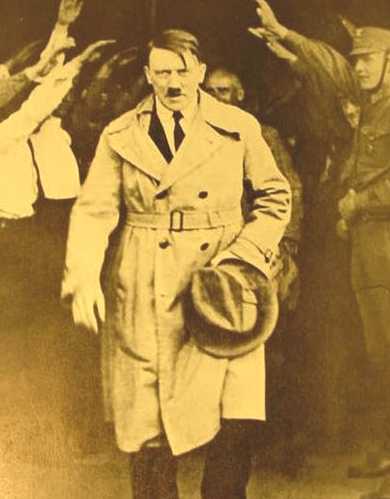
Psychoanalyst Walter C. Langer's psychological profile of Nazi dictator Adolf Hitler, written for the OSS during WWII, represented a second major analytical departure for the USG.
Lippmann's focus upon the elite and Bernays manipulation of the crowd represent two poles of communication with and comprehension of, an audience. In their case, the audience was primarily a domestic one while the exigencies of WWII and the Cold War forced American policymakers to look overseas and try to grasp the perspective of foreign worldviews boasting complex and alien ideologies of a militant character. Again, the dichotomy of examining elite leaders and the mass-society were followed in the respective landmark studies by Ruth Benedict and Walter C. Langer.
Benedict, a disciple of Franz Boas, carried out a cultural anthropological analysis of the Meiji-Taisho-Showa era Japanese mind, culminating in her book The Chrysanthemum and the Sword. Benedict characterized the Japanese people as "debtors to the ages" and explained the apparently suicidal fanaticism of the Imperial Army soldier as a psychological legacy of the "On-Giri" honor and debt social traditions of Japanese society. This technique of cultural analysis, which is also visible in Raphael's Patai's The Arab Mind, elevates deep-set cultural behavior patterns ( though it can also lead to distorting exaggerations and a misplaced attempt to apply aggregate stereotypes to explain individual behavior).
Langer and his team of psychoanalysts, likewise made their study from a distance and began the field of pychological profiling with their study of Adolf Hitler and other top Nazi leaders. While Benedict's effort was explanatory, Langer's was also intended to be predictive. In both instances, their work was available to high level policy makers for the making of strategy, propaganda and operations that were termed for the first time, "psychological warfare". The integration of social science expertise into official and "black" USG communications and diplomacy would continue to evolve during the Cold War until the Vietnam War brought a serious break between the academic community and the CIA and Pentagon, that continues, for the most part, until this day.
While our political appointees, diplomats, CIA officers, military IO and PSYOPS specialists are getting a beating (often deserved) in the MSM and the blogosphere for the poor state of affairs in which they labor, fairness requires the observation that their task today is immeasurably more complex than that of their forerunners. This is a point that cannot at present time be overstressed. Set aside the deficit of trained linguists in "hard" languages, the paucity of firsthand HUMINT with which to work, the normal interagency obstructionism and bureaucratic warfare and the frustrations of out-of-touch management. Those are tactical and organizational difficulties which could be remediated.
Here are the daunting structural and strategic challenges faced in crafting a unified and persuasive "American message" in the war of ideas:
The cultural multiplicity of the global audience, which is/are:
- Tiered from real-time postmodern transnational elites down to pre-modern tribal villagers still relying upon an oral tradition who receive their information flow hours, days, weeks or later.
- Viewing events from worldviews based upon five or more major civilizational traditions and many times that number of major subnational or subcultural traditions .
- Often times the audience is locked into a feedback loop with relatively sophisticated and influential (or impoverished and alienated) expatriate communities in the West and United States.
A multiplicity of information platforms which are:
- Spreading access to information with increasing rates of economic efficiency in a way that leapfrogs people over Gutenberg and directly into the World Wide Web.
- Are evolving technologically both in terms of processing power and parameters of expression that defy linear trend predictions (there are really more usable app ideas than ever get fully developed for reasons of return on investment and IP issues).
- Are evolving at a speed beyond which bureaucratic acquisition and budgetary schedules can adjust in order to keep USG employees in line with the tech capabilities of the private sector.
A multiplicity of information messages in a net volume that:
- Creates sheer "Attention scarcity" problems in target audiences -usually elite - which have begun to operate psychologically under the dictates of the "attention economy".
- Creates a deafening "White Noise" through which critical messages to the target audience can neither be seen nor heard nor reinforced with reliability or be perceived in the proportion or perspective desired.
- Ratchets up the Darwinian velocity of the marketplace of ideas to snuff out or mutate memes faster than IO planners can adjust while also trying to bring along the portion of the audience still processing at much slower rates of comprehension.
What is to be done? I fear that I have no silver bullet solution. Reader Dominic C. suggested yesterday in the comment section:
"On 4GW front, there is a constant debate about why "public diplomacy" and "information war" / propaganda is poor. Surely the basic reason is that there are very few top quality marketing professionals who understand psychology and the few who exist do not work for the govt/mil. To the extent they are involved in politics, they usually roll in for elections and roll out.
If I were in charge of a 4GW campaign, I wd integrate professionals like Cialdini in my comms structure. There is an abyss between (a) the subjects studied in traditional politics, history, military etc and (b) marketing, psychology, cog sci, evolutionary bio etc.
America plus allies needs a 21st Century version of Moltke's Prussian General Staff that combines these two branches into a training system so that politicians and soldiers have inter-dsciplinary skills"
This seems quite sensible as a first step to gaining a strategic grasp over what is really an "information ecosystem as a battlespace".
Labels: 4GW, 5GW, cultural intelligence, disinformation, IO, propaganda, public diplomacy, soft power
¶ 9:02 PM 11 comments
I have a number of posts in the works but professional and personal committments are sharply reducing blogging time. Should have some new posts up either later this evening or early tomorrow. Things should hopefully lighten up around Tuesday.
However, I did help spark a cross-blog conversation on 5GW and generations of war theory between ProgressiveHistorians and Dreaming 5GW. Pundita was also kind enough to feature a few remarks of mine that I sent via email. Check out the discussions.
Finally, congrats to A.E. of Simulated Laughter for being the latest to join the impressive stable of writers that Curtis has given a home to at Dreaming 5GW.
Going offline now....over and out!
Labels: 4GW, 5GW, blogging, blogroll, COIN, dreaming 5gw, progressivehistorians, pundita
¶ 11:51 AM 0 comments
Props to Curtis for his altruistic act of blogospheric historiography in creating an online 5GW Timeline. It will be highly useful to know exactly who said what/when before writing any more 5GW posts. Thanks, Curtis!
Dreaming 5GW is on a roll lately. Check out Shane Deichman's "xGW Evolution: Purely Reactionary" and Subadei's "Hammes 5GW Redux:Via Phil" ( original post by Phil at Pacific Empire is here, plus Phil's previous "“Fourth-generation warfare expert to speak in Wellington on Monday”).
Great work, gentlemen.
Labels: 4GW, 5GW, dreaming 5gw, pacific empire, theory, war
¶ 8:08 AM 4 comments

Eric Martin who blogs at TIA and American Footprints has a guest-post at The Newshoggers entitled "Guest Post - Who's Killing The Clerics Of Najaf? ". An excerpt:
"The situation in Najaf for Iraq's premier Grand Ayatollah, Ali al-Sistani,
has been growing rather precarious as of late:
Four aides to Iraqi Grand Ayatollah Ali al-Sistani have been killed in Al-Najaf over the past two months, raising many questions as to the safety of Iraq's supreme Shi'ite leader and the motives of the perpetrators of the attacks.
According to media reports, aides to Iraq's three other grand ayatollahs have also been threatened. "The assassination operations are organized and big resources are allocated [to carry them out], which makes it difficult to accuse any local side of being behind" the attacks, the assistant director of the office of Muhammad Bahr al-Ulum, Muwaffaq Ali, told the London-based "Al-Hayat" this week.
This is a story that I have been attempting to track over at my other blogospheric venues, but it is an opaque tale of shifting political intrigue that defies easy analysis. For example, it is still unclear which party (or parties) has been behind this series of assassinations, and to what purpose (or purposes). The first two or three killings were thought to be the work of Moqtada al-Sadr's forces - which is completely plausible in at least one of those cases (especially given the history between Sadr's forces and the target in the third killing). But this is speculation, and by no means a given. Such uncertainty is quite remarkable given the stakes involved (and the fact that, generally speaking, parties seeking to send a message in such a manner want the targeted group to know who the sender was). "
Read the whole thing.
Labels: 4GW, 5GW, eric martin, insurgency, iraq, islamist, newshoggers, shia, sistani, terrorism
¶ 8:18 PM 5 comments
"Super-empowered individuals are practitioners. Fifth Generation Warfare is a doctrine
....It makes sense that Super-Empowered Angry Men are most likely to choose the most violent and destructive doctrine within their means. I do not think the essential nature of Fifth Generation Warfare with its long-term planning horizon fits that description. For super-empowered individuals with a strategic mindset, 5GW may be an attractive doctrine and super-empowered individuals may prove to be 5GWs most effective practitioners."
Nice distinction and clear thinking by Arherring at Dreaming 5GW, where the conversation continues in successive posts.
Labels: 5GW, dreaming 5gw, superempowered individuals, theory, war
¶ 8:09 AM 0 comments

"...eventually, the application of our military power will mirror the dominant threat to a significant degree. In other words, we morph into a military of superempowered individuals fighting wars against superempowred individuals"
- Vice-Admiral Arthur K. Cebrowski and Dr. Thomas P.M. Barnett (1)
"First, very few people would be needed to carry out the attack. A single individual could spread a nationwide pandemic using a highly contagious virus. A two person team would be sufficient to deploy and detonate a couple of nuclear weapons"
- Dr. Fred C. Ikle, Annihilation From Within
"In fact, we may have seen the the first of 5GW in the anthrax and ricin attacks on Capitol Hill. To date, neither has been solved. Apparently a small group, perhaps an individual, decided to take on the power of the United States."
- Colonel T.X. Hammes, The Sling and the Stone
"Over time, perhaps as little as in twenty years, and as the leverage provided by technology increases, this threshold will finally reach its culmination - with the ability of one man to declare war on the world and win."
- John Robb, Brave New War
To a paraphrase Karl Marx, a specter is haunting general staffs, intelligence agencies and statesmen the world over, the coming of the superempowered individual. No one quite knows what form the superempowered individual will take, but the devolution of increasingly powerful and versatile technologies at continually descending costs into the hands of individuals, coupled with the increasing interdependency of complex systems due to globalization, make their arrival all but inevitable.
As it stands now, the world is but one self-sacrificing genetic microbiologist away from a superempowered suicide bomber riding international air routes to a new black plague. However, the advancing edge of technology is the province of scientists and imaginative futurists, and even they are unable to predict how emerging technology will be employed for novel uses the inventors never intended. Therefore, I will leave speculating on the means of plausible superempowered warfare to others who are better qualified but human nature, being a more reliable variable, may be within our grasp to comprehend.
Defining Superempowerment:
Superempowered individuals are not mere terrorists with bigger, badder, car bombs. Imad Fayez Mugniyah and even Timothy McVeigh, who carried out thev Oklahoma City bombing in what must have been a very small and insular cell of extremists, are not the models despite their impressive accomplishments at mass murder. Nor are the great monster-rulers of the past like Adolf Hitler or Joseph Stalin who were State-empowered leaders acting through the vast governmental apparatus of the nation-state. To qualify as a superempowered individual, the actor must be able to initiate a destructive event, fundamentally with their own resources, that cascades systemically on a national, regional or global scale. They must be able to credibly, "declare war on the world". Who could or would desire to do such a thing?
The Psychology of the Superempowered Individual:
A useful prototype for the coming superempowered individual, though he never achieved or intended a systemic level of mass carnage, would be the Unabomber, Dr. Theodore "Ted" Kaczynski, a brilliant but mentally disturbed mathematician turned radical environmentalist and terrorist. Kaczynski, who spent years in relative penury in a wooden shack, possessing minimal financial resources, nevertheless managed to elude the FBI for seventeen years while carrying out an intermittant bombing campaign. Ultimately, Kaczynski's terrorism resulted in the showcasing of his weird,anti-technology, ideology ( the "Unabomber Manifesto") in the two premier media outlets of the American Establishment, The New York Times and The Washington Post, and subsequently his message went on to permeate much of the global media. While Kaczyinski's body count and record of mayhem were relatively modest, considered in terms of a cost-to-benefit ratio and information operations, he might be the most successful terrorist of modern times.
Kaczynski demonstrated four characteristics that are likely to be shared with superempowered individuals:
a) "Lone Wolf" actor
b) Superior Intelligence
c) Opportunity for leveraging Complex Systems
d) Profound alienation, isolation or societal disconnection
Kaczinski's work as a student and professional academic in higher mathematics were regarded as highly impressive by his mentor and colleagues and reputedly his IQ was rated between 160 and 170 ( 2). While there is considerable debate among psychometricians about quantifying the upper limits of human intelligence, whatever the scale used, Kaczynski's mental capacity would safely fall within the upper 0.5 % of the population and represents an outlier of ability. Most likely, the Unabomber's level of IQ substantially exceeds what would be required to operate as a superempowered individual and the population base for such actors would be the upper 5 %; those people capable of understanding, calculating or estimating the probable outcome of multiple interacting variables.
According to testimony from family members and associates, Kaczynski suffered from emotional and social deficits relative to his unusual intellectual gifts and has been described variously as clinically paranoiac or schizophrenic by psychiatrists and psychologists. Kaczynski's psychological profile reports his social alienation from his peers starting even before the onset of adolescence (3). By the time of his terrorist career, Kaczynski was writing vitriolic letters to family members, accusing them of abuse and harrassment and his immediate social network was virtually non-existent. Mental or emotional disturbance, especially forms of clinical depression, coincides with unusually high levels of productive creativity, while the unusual sensitivity of profoundly gifted individuals can make them ripe for disappointment(4).
Complex systems provide the opportunity or environment for superempowered individuals to initiate system perturbations or cascading effects that ripple across multiple systems, including the political, economic and physical. Kaczynski's manifesto (as well as his targeting of airlines and technologists) clearly indicated that he grasped, however warped his agenda, the concept of interacting systems and downstream effects. Intelligence and will are not enough; the actor must have or conspire to gain access to a "choke point" from which he can, in jujitsu fashion, leverage the connectivity of a complex system against itself.
Alienation is a useful psychological precursor to cultivating a lack of empathy and devaluation, dehumanization and demonization of intended categories of victims. Adolf Hitler's earliest recorded anti-semitic diatribe comes in a letter written in 1919, giving the future Fuhrer two decades to steel himself before taking concrete steps to enact " the Final Solution". The doctoral dissertations of Pol Pot's collaborators, Hou Yuon and Khieu Samphan, laid out the basis of Khmer Rouge policy way back in 1955. It may be that such long term "mental rehearsals" are required to desensitize or justify the execution of systemic violence and that we would see such a pattern in the lives of superempowered individuals.
What Can Be Done?:
In terms of defense against superempowered individuals, the best option is engineering resilience and redundancy into all our critical systems and platforms, physical as well as social and political. We must with determination, lower our societal vulnerability to catastrophic attack so that back-up systems and third order contingencies " short-circuit" the attack of a superempowered individual on our power, economic, communication and governmental networks. Tom Barnett, John Robb and most of all Steve DeAngelis , have all been preaching the gospel of resilience but the Federal government has yet to make this a priority .
Secondly, (and frankly, I'm not certain how this should be best implemented) we need to address reconnecting mildly disturbed but very talented ( and thus, potentially, exceptionally dangerous) people to wider social support and mental health networks before they wander irrevocably into the isolated realm of delusional violence. Rarely, if ever, do people just "snap" and commit heinous atrocities out of the blue. Instead, there is a prior pattern of drifting away, of eccentric and increasingly belligerent behavior over time until the individual, in isolated rage, mounts toward a crisis and lashes out at the world.
Unfortunately, a superempowered individual will do more than simply barricade himself in his house or shoot up a work place. Instead, he will try to take a good chunk of society with him and will have the capability to do so. We have a window of opportunity now to create strategies to deal with these eventualities and it should not be wasted.
Footnotes:
1. Barnett, Thomas P.M. and Cebrowski, Arthur K. " The American Way of War", Transformation Trends, January 2003.
2. Time.com Community Transcript " The Unabomber Trial" November 12 1997
3. Johnson, Sally C. "Psychological Evaluation of Theodore Kaczynski"
4. Simonton, Dean Keith "Are Genius and Madness Related? Contemporary Answers to an Ancient Question", Psychiatric Times. June 2005 Vol. XXII Issue 7
ADDITIONAL LINKS:
Tom Barnett:
"My own personal 5GW dream"
John Robb:
"Lots of discussion of what 5GW is"
Shlok Vaidya:
"What Should Superempowered Individuals Do?"
"5GW And Beyond"
tdaxp:
"Dreaming 5th Generation War"
Zenpundit:
"THE SUPER EMPOWERED INDIVIDUAL"
"REVIEWING THE DELETED SCENE ON SYSTEM PERTURBATION - PART II. "
Glittering Eye:
"Zenpundit on the Super-Empowered Individual"
Dreaming 5GW :
"Rule-sets, System Perturbations and 5GW"
"Barnettian 5GW"
Wolf Pangloss:
"Fifth Generation Warfare: Conspiracy and Shadow Government"
Labels: 4GW, 5GW, global guerillas, superempowered individuals, terrorism
¶ 1:35 AM 12 comments
Looking forward to this conference. A few links in the spirit of the event.
Patterns of Conflict (PDF)
The Strategic Game of ? and ? (PDF)
FMFM 1-A Fourth Generation War (PDF)
OODA LOOP
Labels: 4GW, 5GW, boyd 2007, dni, john boyd
¶ 7:28 PM 0 comments
Tom brought an excellent post by Curtis Gale Weeks at 5GW to my attention and then offered his own commentary. Here are the posts:
"On the Barnettian 5GW" by Curtis Gale Weeks
"Nice post by Curtis on 5GW" by Dr. Barnett
I have to agree with Tom and Shane that Curtis really hit his stride with that post. I have a few comments of my own on their 5GW exchange.
Curtis wrote:
"—There is a term used variously and vaguely in these discussions; I myself conflated two interpretations of the term. The Robbian view seems to depend on unequal distribution of “-powerment”, in which some individuals or groups become more powerful than the general human population; whereas, at heart Thomas Barnett’s Core/Gap paradigm and strategy seem to depend upon an eventual equalization, or a relative equalization (which is a type of oxymoronic phrase), of individual empowerment across the globe"
I don't think Curtis' use of " relative equalization of individual empowerment" is actually as oxymoronic as it seems. This is an astute normative economic observation on Week's part. Instead, it illustrates the aggregate effect of Schumpeter's creative destruction rippling across the globe as the spread of economic connectivity and information technology proceeds apace. The spread, of say, cell phone-based wifi internet access to states with sketchy (at best) landline telephone service, is a quantum leap forward for equalization of empowerment on the macro- scale even as certain small networks or individuals of those states on the micro- scale, possess the ability to leverage still greater levels of empowerment to become "more equal than others".
This seeming dichotomy are flip sides of the same coin in any true market action and is always ongoing to some degree, provided the market is permitted to function. Unless the comparative advantage is artificially locked in by force ( this is what tyrants of disconnectivity, like Mugabe and Kim Jong-Il, do - force everyone else to remain still in order to retain their own local "super empowerment"), any individual or entity's "super empowerment" is apt to be a fleeting condition unless constantly maintained by adaptive improvements.
Much later, Curtis opined:
"Many people seek saviors of one sort or another; many are happy to delegate responsibility for the things they themselves cannot touch or do not have the time or motivation to fix themselves — or do not understand, themselves. The crux of the Barnettian paradox involves the manner and method of assigning these delegations so that the general man-on-the-street can rest easily knowing his prosperous future is assured. Even within the Core, much doubt about this process of delegation exists; various superempowerments within and without the Core threaten to upset faith in the systems of the Core. "
Visible super empowerment within a society is a condition representing both change as well as inequality; two phenomena against which it is nearly always possible to rally anger, envy, fear and political opposition.
Tom Barnett wrote:
" Instead of trying to be all things to all individuals in Vol. III, I'll explore the one thing I know well. I do that because I feel the knowledge is important in its own right, addressing a serious gap in our tool kit vis-a-vis other, rising societies of SEIs (especially China and India).
....The book on SEIs remaking the world in their vision--positively--is a book I could see writing with Steve a few years down the road."
The accent on positively remaking the world by Dr. Barnett is a noteworthy point to keep in mind. Numerically speaking, most highly intelligent, energetic, creative and task persistent individuals who function as change agents are overwhelmingly positive actors. Maslow wrote of a stage of self-actualization and in a certain sense, exceeding oneself by changing society in a positive direction may be an expression of both self-actualization as well as super empowerment The Ted Kaczynskis and Osama Bin Ladens are perverse and statistically rare anomalies; exceptions that prove the rule, in a sense.
Unfortunately, the exceptionally negative super empowered individuals do and will exist and have the potential to inflict system perturbations, at least on a one-shot, " black swan", basis. Deep uncertainty regarding the nature of such future superempowered individuals' actions has to be dealt with in terms of proactively engineering systemic resilience to cope with these malicious one-hit wonders. Steve's Development-in-a Box paradigm at Enterra is one effort to begin comprehensively addressing these deficits. Tom's Sys Admin is another. Building new, highly decentralized, "Wikinomic" mass-collaborative platforms from scratch, may be yet a third.
Labels: 5GW, barnett, deangelis, dreaming 5gw, superempowered individuals, wikinomics
¶ 2:22 PM 3 comments

Gregory F. Treverton writing in the latest issue of The Smithsonian:
"Risks and Riddles"
"During the cold war, much of the job of U.S. intelligence was puzzle-solving—seeking answers to questions that had answers, even if we didn't know them. How many missiles did the Soviet Union have? Where were they located? How far could they travel? How accurate were they? It made sense to approach the military strength of the Soviet Union as a puzzle—the sum of its units and weapons, and their quality. But the collapse of the Soviet Union and the rise of terrorism changed all that. Those events upended U.S. intelligence, to the point that its major challenge now is to frame mysteries....
....Puzzle-solving is frustrated by a lack of information. Given Washington's need to find out how many warheads Moscow's missiles carried, the United States spent billions of dollars on satellites and other data-collection systems. But puzzles are relatively stable. If a critical piece is missing one day, it usually remains valuable the next.
By contrast, mysteries often grow out of too much information. Until the 9/11 hijackers actually boarded their airplanes, their plan was a mystery, the clues to which were buried in too much "noise"—too many threat scenarios. So warnings from FBI agents in Minneapolis and Phoenix went unexplored. The hijackers were able to hide in plain sight. After the attacks, they became a puzzle: it was easy to pick up their trail. Solving puzzles is useful for detection. But framing mysteries is necessary for prevention. "
This article, though written for a general audience, struck a number of chords with me. Specifically:
* "Noise" is an important consideration in an era of attention scarcity economies. Eliciting a surge in " white noise" by unrelated third parties ( say disinformation that sends pro-lifers off on a media campaign and in turn, energizers their pro-choice enemies to respond, diverting the attention of the general public to "X" degree) is useful camoflague. Purpleslog had a deservedly well-received post at Dreaming 5GW on " the Puppetmaster" as a "5GW Archetype". Such a mentality would cultivate media noise the way the KGB once set up and subsidized endless Communist front groups in the West.
* Uncertainty is relative. Some "mysteries" are more decipherable with a change of perspective, scale or temporal framework; others represent questions of deep uncertainty. Imaginative scenario planning exercises can help pattern recognizers familiarize themselves with latent possibilities ( Neo-Eurasianism ? Pan-Turanism ? A derivatives-driven implosion of globalization? Eco-extremist bioterrorists longing for planetary genocide?).
We need radical thought experimentation.
UPDATE:
IT security expert Gunnar Peterson has already covered this base well but from a different angle:
"Vulnerability Puzzles and Mysterious Threats"
"Risk differs from uncertainty in that risk may be measured and managed whereas uncertainty may not. Risk management efforts hinge on this important distinction because it highlights differences where a team may be more proactive. For instance, many vulnerabilities are known, hence they may be measured and managed whereas the threats to a systems contain a greater degree of uncertainty in that the threat environment contains numerous elements such as threat actors that one’s organization can not directly control."
Labels: 5GW, analytic, cognition, Ic dreaming 5gw, intelligence, theory, uncertainty
¶ 9:15 PM 3 comments

Colonel Thomas X. Hammes, author of the critically acclaimed The Sling and The Stone, opines on the nature of 5GW at DNI.
" Fourth Generation Warfare Evolves, Fifth Emerges " (PDF)
After surveying the evolution of 4GW, Hammes errs on the side of caution while speculating on the possible form that 5GW might take. Like John Robb, Hammes sees the potential for superempowered groups motivated by primary loyalties; as with Fred Ikle, the proliferation of potentially deadly dual-use technologies figures significantly. Like Chet Richards and Peter Singer, Hammes is interested in the growing role of PMCs.
In terms of alternative defense thought, Hammes has put up a solid, consensus-building, article. I think however, we may be reaching the stage where we need to try and envision the unexpected, in terms of the evolution of 5GW. Extrapolating linear trajectories from current military practice has been a fertile field for 4GW theory and for visualizing 5GW . I worry however that we ("we" meaning broadly all those think and care about such matters) are unwisely crafting a box of expectations for ourselves. Narrowly framing our premises inevitably creates a lacuna of inattention to other variables.
Perhaps, we need to consider a stage of scenario exercises mixing military theorists with experts from radically different domains, perhaps alongside some horizontal thinking visionaries, futurists and science fiction writers
ADDENDUM:
*ARHERRING* has extended commentary on Hammes at Dreaming 5GW ( Thank you for the correction, Curtis. Apologies to Arherring for my mistake).
Labels: 4GW, 5GW, dni, hammes, horizontal thinking, military, theory, war
¶ 9:38 AM 3 comments
I'm a tad late on this today due to a busy weekend but better late than never. In fact, I am forced to do this one " speedy quick":
Bruce Kesler - "Rules of Engagement for Conscience and Sense". Top billing. Regardless of the prospects for the " surge" (insert healthy realism about the parameters of the possible here) I am totally opposed to attempting to micromanage battlefield tactics from the Senate Foreign Relations Committee. That's simply a bad precedent for future conflicts and I'm not comfortable with some military manuver becoming the equivalent of "partial birth abortion" at the hands of folks not currently being shot at. There are more responsible ways to signal displeasure with Bush administration policy, if that is the Senators' intentions.
Stephen DeAngelis - " Wikileaks and Secrecy"
Dave Schuler - "The Fog of War"
Michael Tanji - "(Global) Guerrillas in our Midst?"
Thomas P.M. Barnett - "When America threatens war with Iran "
David Kilcullen -"Two Schools of Classical Counterinsurgency"
MountainRunner - "Petraeus on Goldwater-Nichols & Private Security Contractors"
Purpleslog - "Criticism of 5GW found in TDAXP Comments"
Whew ! I'm outta here....that's it!
Labels: 5GW, COIN, global guerillas, recommended reading, war
¶ 1:13 PM 0 comments